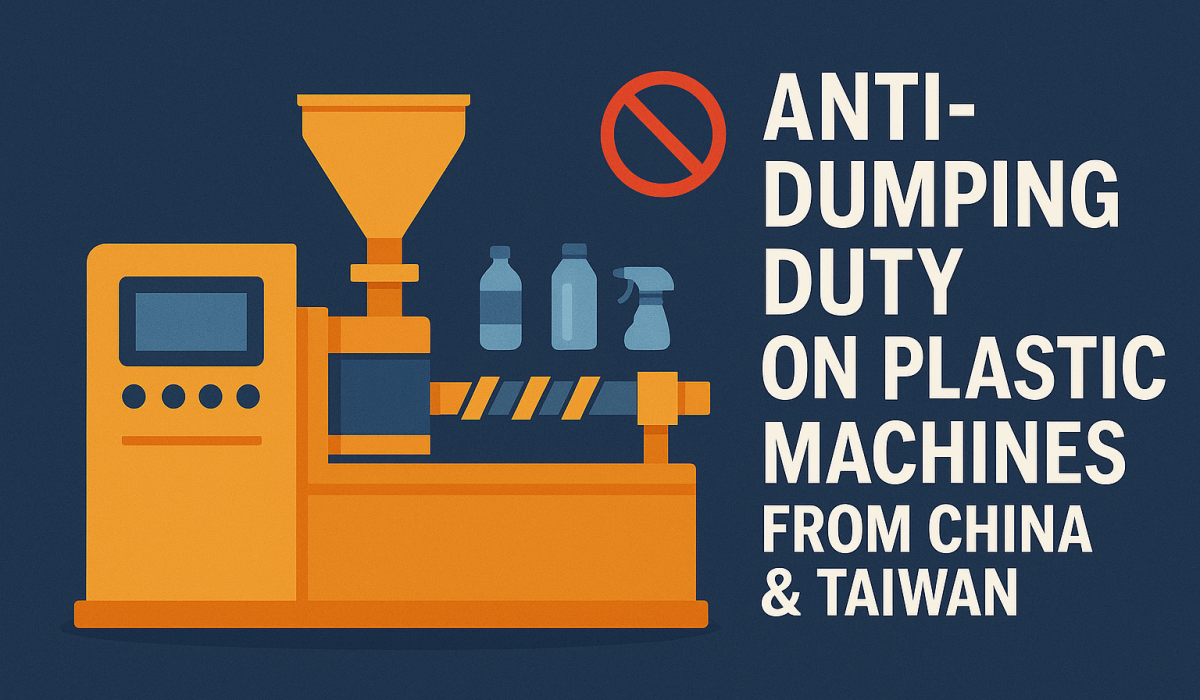
India has introduced anti-dumping duties ranging from 27% to 63% on imported plastic processing and injection moulding machinery from certain international suppliers. This move is aimed at protecting domestic manufacturers from unfair pricing practices and promoting a balanced competitive environment.
Why This Duty Was Introduced
An in-depth investigation concluded that these machines were being imported at significantly low prices, causing substantial harm to local manufacturers. The underpricing of goods — known as dumping — was found to be directly impacting the financial health of India’s plastic machinery industry.
To counteract this, authorities have approved the imposition of duties for a period of five years. The objective is to stabilize the domestic market, ensure fair pricing, and encourage the growth of indigenous manufacturing capacity.
What Products Are Affected
The duty applies to injection moulding machines used for plastic processing with clamping forces ranging between 40 and 1,500 tonnes. These may be imported as:
- Fully assembled units
- Semi-knocked-down (SKD) kits
- Completely-knocked-down (CKD) kits
Depending on the exporter and origin, the duties vary:
- Select manufacturers face duties between 27% to 48%
- Some suppliers are subject to 35%
- Others fall under a flat 63% duty
These rates are calculated based on the CIF (Cost, Insurance, and Freight) value of the goods at the port of entry.
Impact on Importers & Buyers
- Cost Increase: Importers will now face higher landed costs, making imported machinery less price-competitive.
- Supply Chain Review: Businesses reliant on such imports may need to reconsider supplier contracts and diversify sourcing.
- Customs & Compliance: Additional paperwork and accurate product classification will be critical to avoid penalties.
How Nekura Logistics Can Help
At Nekura Logistics Private Limited, we provide tailored support for companies adjusting to this regulatory change:
- Duty impact analysis for imported equipment
- Sourcing guidance to identify cost-effective, duty-exempt alternatives
- Smooth customs clearance under new duty structures
- Compliance documentation to prevent delays and legal exposure
Our team stays ahead of trade policy developments to keep your logistics operations compliant, cost-efficient, and agile.
Looking Ahead
This anti-dumping move is a clear sign that Indian trade policy is increasingly focused on self-reliance and fair competition. Importers and exporters who proactively adapt will gain an edge in both pricing strategy and supply chain stability.Nekura Logistics is here to help you turn every policy shift into an opportunity for growth.